James Baldwin - The Struggle of The Artist (1969)


Reelblack One
@reelblackAbout
YouTube has DEMONETIZED our channel for posting "reused" content Allow us to keep the content intact and available on this platform by making a donation. Cash App $Reelblack PayPal.me/reelblack https://www.patreon.com/reelblack https://shop.reelblack.com Subscribe to our backup channel www.youtube.com/ReelblackTwo ------ Reelblack's mission is to educate, entertain, enlighten and empower people through Black film. Since 2007, we have been capturing the New Black Film Revolution through interviews with the filmmakers, actors and musicians that make up the movement. In addition to our original content, we dig through archives to share video and music relevant to these conversations. Founder MIKE D. is a graduate of both NYU and The American Film Institute. If there is content shared on this platform that you feel infringes on your intellectual property, please email me at [email protected] and [email protected] with details and it will be promptly removed.
Latest Posts


Video Description
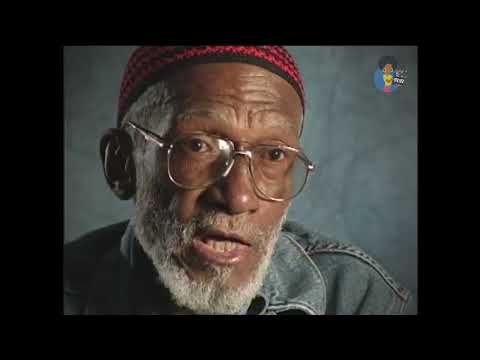
JAMES BALDWIN | THE STRUGGLE PRODUCED AND DIRECTED BY NATHANIAL MONTAGUE | NARRATED BY JAMES BALDWIN James Baldwin has become a black prophet of our time, one of the first to be listened to—if not always heard—by white men. He doesn't look like a prophet. He is frail and slight, with an intense exaggeration of a face. "James Baldwin is a little man, physically," writes Kenneth Clark, "with tremendous emotional and intellectual power. He radiates a nervous sensitive involvement with all aspects of his environment . . . one has the impression that he is incapable of communicating anything other than the total truth which he feels and thinks at that particular time." To communicate, his words are carefully selected, savored, deliberately delivered, then allowed to fall in bursts. They are his weapons of truth, his descriptions of reality. It is a difficult language he speaks; his dictionary is himself, his grammar is his life. Such a language must be self taught. He uses it to speak to a people "to-tally unlettered in the language of the heart; totally distrustful of whatever can not be touched; panic stricken at the very first hint of pain. . ." And yet, he says later on this record, to speak further to these people, ". . pain which signals an ache is a pain which can save your life." It is part of his function as a writer, he has said, to speak for those who can not; he also writes for those who have not always been able to listen. Here on this record is a personal description of growing up, charted riot by age nor by marks on a wall, but by self-knowledge arduously learned. The graphic design of his life has been sketched, in part in his own books with his own pen. James Baldwin was born in 1924 in Harlem Hospital, the oldest of nine children, the first son of a proud and bitter and rigid clergyman from New Orleans. David Baldwin died in 1943 when his son was nineteen; at fourteen he had already become a Holy Roller preacher in Har-lem's storefront churches and was taking no small pride in being a better draw than his father. He graduated from De Witt Clinton High School in 1942 he was editor of the Literary Magaziiie there and, already master of the spoken, learning the ways of the written word. The next year was the year his father died; the year he left home and began to work at becoming a writer. The next five years were spent living in Greenwich Village; by day working as a handy-man, office boy, dish washer, waiter; by night, writing. Reviews and essays appeared in the Nation, New Leader, Commentary. He met Richard Wright, who helped him win, in 1945, the Eugene K. Saxton Memorial Award. In 1948 he won a Rosenwald Foundation grant and went to Paris, where he learned that, an alien in his own coun-try, he was to be at home in strange lands. The books began appearing: "Go Tell It on the Mountain," "Notes of a Native Son," "Giovanni's Room," "Another Country,' "Nobody Knows My Name," "The Fire Next Time," "Tell Me How Long the Train's Been Gone"—and the plays, "The Amen Corner" and "Blues for Mr. Charlie." James Baldwin. They call him a black writer. He is a writer who is black. And the problem, he says, is white. He writes about what it's like to be a black man in America, and, more, about what it's like to be a human being. He writes with love and with sorrow, with anger and with despair, with honesiy and with eloquence. And we listen and, perhaps, begin to hear. ##### Reelblack's mission is to educate, elevate, entertain, enlighten, and empower through Black film. If there is content shared on this platform that you feel infringes on your intellectual property, please email me at [email protected] and [email protected] with details and it will be promptly removed.





Essential Art Books & Tools
AI-recommended products based on this video
![James Bond Sean Connery 6-Film Collection (BIL/4K Ultra HD) [Blu-ray]](https://m.media-amazon.com/images/I/81gmDeEu1bL._AC_UL960_FMwebp_QL65_.jpg)
James Bond Sean Connery 6-Film Collection (BIL/4K Ultra HD) [Blu-ray]

Harry Potter and the Goblet of Fire (Interactive Illustrated Edition)

The Hybrid Prince (Wings of Fire, Book 16)

The Best Of Earth Wind & Fire Vol. 1 (Vinyl)

Art Kit, 272 Pack Art Set Drawing Kit for Kids Girls Boys, Deluxe Gift Art Supplies with Trifold Easel, Origami Paper, Coloring Pad, Sketch Pad, Pastels, Crayons, Pencils, Watercolors (Pink)

Watforsh Boho Wooden Dangle Earrings for Women Vintage Brown Earrings circle ground Lightweight dangling with copper hammered style handmade jewelry

CIVO Ladies Watches for Women Vintage: Small Stainless Steel Analog Waterproof Wrist - Square Face

Tribesigns Modern Computer Desk, 63 x 31.5 inch Large Office Desk Computer Table Study Writing Desk Workstation for Home Office, Vintage Black Metal Frame
