Mazda's Greatest Feat: The Rotary Engine Story

Barchetta
@barchettaAbout
Welcome to Barchetta, home of all things relating to automotive history and culture. I mainly focus on transportation design. In the QUICKFIRE REVIEWS series, we'll discuss the styling of cars both new and old. The INDUSTRY ICONS series will take us through a journey through the careers of the most influential people in the automotive industry. From time to time, you can also expect to see longer-form content that dissects a particular subject in car/design history. There will also occasionally be pieces going over more general industrial design, art history, and architecture. As always, if you have an idea for a video that you'd like me to make, then be sure to let me knew through either video comments or the channel discussion tab.
Latest Posts


Video Description
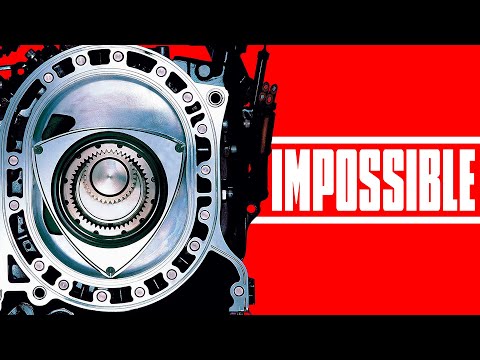
BECOME A PATRON: patreon.com/BarchettaMedia BECOME A YOUTUBE MEMBER https://www.youtube.com/channel/UCZCB8ChAn8PQXzONCi193FQ/join TIMESTAMPS 0:00 INTRO 2:02 TOYO CORK KOGYO/PREWAR ACTIVITIES 7:24 EARLY SUCCESS 8:49 THREAT OF CONSOLIDATION 10:43 FELIX WANKEL 11:52 EARLY ROTARY ENGINE DEVELOPMENT 15:16 MAZDA DISCOVERS THE ROTARY 18:22 KENICHI YAMAMOTO 23:12 THE DEVIL'S NAIL MARKS 25:08 MORE ROTARY DEVELOPMENT 27:07 MAZDA COSMO DEVELOPMENT 32:51 MAZDA COSMO HISTORY Mazda was not the only company interested in the technology. In The New Mazda RX-7 and Mazda Rotary Engine Sports Cars, author Jack Yamaguchi notes that over 100 firms sought a license, 34 of which were Japanese. Thankfully, NSU entertained Mada’s inquiry. Tsuneji and several other company representatives then visited its headquarters in Neckarsulm. NSU granted Mazda a license on October 12, 1960, the 40th anniversary of the company’s founding. The deal wasn’t officially approved by the Japanese government until July 1961. It cost the automaker 280,000,000, or $780,000, and allowed Mazda to use and sell rotary engines in Japan and Asia. Soon after the agreement was finalized, the automaker formed the Rotary Engine Development Committee. This was a patchwork team comprised of members of the design, material research, production engineering, manufacturing, and test divisions. The deal also included some sample engines. Before these arrived in Hiroshima, engineers built test units based on the design of the KKM400. It was at this point that Mazda realized just how flawed the engine architecture truly was. If Mazda wanted to make it a reality, then it needed to shore up its research efforts. The patchwork approach it had taken thus far had turned in disappointing results. Larger automakers with more resources could take that same approach and make more progress on their rotary programs. To keep pace with its contemporaries, Mazda needed to establish a department wholly dedicated to. It did just that in April of 1963, when it founded the Rotary Engine Development Division. To head it up, Mazda looked to a young, brilliant engineer. Kenichi Yamamoto may have been born in the city of Kumamoto, but he had Hiroshima blood in his veins. His family moved there when he was a child. In 1944, Yamamoto graduated from the University of Tokyo with an engineering degree. This led to a job at the Kawanishi Aircraft Company in Ibaraki Prefecture, roughly 60 miles north of the nation’s capital. He returned to his hometown after the war ended and found it in ruins. His mother survived the bombing, though his sister perished. Engineers primarily focused on improving engine durability. The rotor wore away at the inner surface of the housing, leaving behind ‘chatter marks’. They lowered compression and robbed the engine of power. The marks appeared after just 200 hours of testing. Both the NSU sample units and Mazda’s prototype motors suffered from the phenomenon. Employees became so annoyed by this issue that they began calling them ‘the devil’s nail marks’. The team found that they were caused by the apex seals vibrating against the housing. Some of the company’s research focused on reducing those unwanted vibrations. They subdued them by drilling horizontal and vertical holes in the apex seal. This significantly improved durability. Now, test engines could run for 300 hours before succumbing to the chatter market. While cross hollow apex seals wouldn’t be installed on production rotaries, the situation did inspire the engineers to think outside of the box.
Timeless Mazda Rotary Engine Collectibles
AI-recommended products based on this video

LIGHTAILING Light for Lego-75379 R2-D2 - Led Lighting Kit Compatible with Lego Building Blocks Model - NOT Included The Model Set

Airbrush Kit with Air Tank Compressor 2 Dual-Action Gravity Airbrush with 0.2mm 0.3mm 0.5mm Nozzle Air Compressor with Airbrush Coloring Tool Cleaning Brush for Model Paint Hobby Craft

TOCOL for iPhone 17 Pro Case, Full Camera Protection, Built-in Magnetic Ring, Compatible with Magsafe Charger, Drop Protection, Translucent Matte Phone Case for iPhone 17 Pro 6.3 inch (Black) Global Recycled Standard

ESR for iPhone 17 Pro Max Case, Camera Control, Compatible with MagSafe, Shockproof Military-Grade Protection, Magnetic Phone Case for iPhone 17 Pro Max, Classic Hybrid Case, Clear Carbonfree Certified

DUEDUE Magnetic Case Compatible with iPhone 16e Case,Glitter iPhone 16e Phone Case MagSafe Shining Bling Slim Shockproof Women Girl Protective Cover for iPhone 16e,Pink/Blue
