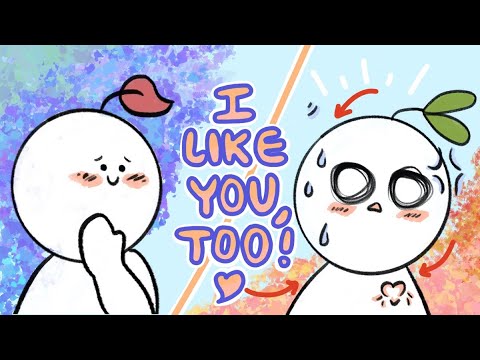
6 Psychological Ways To Tell If Your Crush Likes You

Psych2Go
@psych2goAbout
Welcome to Psych2Go! We are a grassroot organization with the mission of making psychology, mental health, and self-discovery accessible, relatable, and a little less lonely. The founder initially a psychology student, found that psychology is super useful, but unfortunately wasn't accessible to the public like it is today. Through collaborative effort, him and a bunch of animators, students, made bite-sized, animated videos, to explore topics like anxiety, depression, trauma healing, relationships, emotional intelligence, self-love, communication skills, ADHD, autism, introversion, and more. Our iconic sprout mascot represents growth, resilience, and the hope that—with the right care—we can all thrive. Why subscribe? Because Psych2Go isn’t just a channel. It’s a global mental wellness community, where everyone can feel seen. Let’s grow together, one mind at a time. 🌱✨ For Collaborations & Partnerships: 📩 [email protected] 🎨 Animator & Artist Opportunities: [email protected]
Latest Posts



Video Description
Crush. Crush. Crush. Do you have a crush on someone but you can't tell if your crush secretly likes you? Perhaps, your crush is shy or an introvert, and your crush never tell you they like you. Some subtle signs your crush likes you back too may be: they get flustered easily, they mirror you, their pupil dilates etc Need tips on how to impress your crush? Hop over to this video: https://youtu.be/9HiaVFKiHNA Writer: Michal Mitchell Script Manager: Kelly Soong Voice: Amanda Silvera Animator: Annie Wu YouTube Manager: Cindy Cheong References: Aron, A., Melinat, E., Aron, E. N., Vallone, R. D., & Bator, R. J. (1997). The Experimental Generation of Interpersonal Closeness: A Procedure and Some Preliminary Findings. Personality and Social Psychology Bulletin, 23(4), 363–377. doi.org/10.1177/0146167297234003 Moore, M. M. (2002). Courtship Communication and Perception. Perceptual and Motor Skills, 94(1), 97–105. doi.org/10.2466/pms.2002.94.1.97 Newcomb, T. M. (1956). The prediction of interpersonal attraction. American Psychologist, 11(11), 575–586. doi.org/10.1037/h0046141 Chartrand, T. L., & Bargh, J. A. (1999). The chameleon effect: The perception–behavior link and social interaction. Journal of Personality and Social Psychology, 76(6), 893–910. doi.org/10.1037/0022-3514.76.6.893
You May Also Like





Confidence-Boosting Essentials
AI-recommended products based on this video

Desnuage Double Heart Necklace Sterling Silver Cubic Zirconia Cute Dainty Love Pendant Heart Necklace for women

Swarovski Idyllia Pendant Necklace, Heart Pendant with Clear Round-Cut Stone and Clear Round Crystals in a Rhodium-Finished Setting, Part of the Swarovski Idyllia Collection

Bike Phone Mount, Motorcycle Phone Holder - Lamicall Motorcycle Bicycle Cell Phone Mount Clamp for Handlebar, Cycling Mount for iPhone 17 Pro Air, 16 Pro 15 Pro Max S24 Ultra S25, 4.7-6.8" Smartphone Global Recycled Standard
