Route Traffic to Multiple Target Groups using Load Balancer Listener Rules | AWS Load Balancing

Tiny Technical Tutorials
@tinytechnicaltutorialsAbout
Welcome to Tiny Technical Tutorials, where we do bite-size tech lessons that are clear and to the point. No rambling, no fluff, just practical hands-on tutorials to help you get stuff done.




Video Description
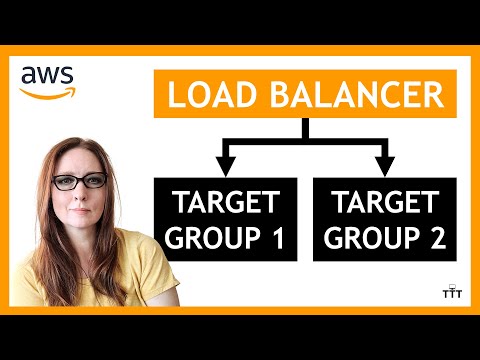
In a prior video (https://youtu.be/ZGGpEwThhrM), we saw how to create a simple application load balancer that routed traffic to a single target group. But what if you have a more complicated use case? For example, what if you need to route GET and POST requests differently? Or route differently based on the user’s browser? Or the destination path? Or something in the query string? For that, you’ll need to work with multiple target groups, setting up listener rules to route traffic to the appropriate place. In this hands-on tutorial, I’ll walk you through how set up a load balancer that uses two target groups. The load balancer will route traffic based on listener rules that we’ll define. 🌟🌟If you’re interested in getting AWS certifications, check out these full courses. They include lots of hands-on demos, quizzes and full practice exams. Use FRIENDS10 for a 10% discount! - AWS Certified Cloud Practitioner: https://academy.zerotomastery.io/a/aff_n20ghyn4/external?affcode=441520_lm7gzk-d - AWS Certified Solutions Architect Associate: https://academy.zerotomastery.io/a/aff_464yrtnn/external?affcode=441520_lm7gzk-d 00:00 – Overviewing the load balancer we’ll be building together 01:49 – Explaining the setup for the EC2 Instances 02:36 – Viewing the index.html pages for the EC2 instances 03:39 - Creating two target groups through the AWS Console 05:04 – Creating the application load balancer with a default HTTP listener 08:50 – Adding load balancer listener rules to route to a second target group 10:05 - Overviewing all six listener rule condition types (host-header, path-pattern, http-header, http-request-method, query-string, source-ip), with examples 11:14 - Creating a listener rule for query-string, forwarding to a second target group 13:03 – Creating a listener rule for http-header and User-Agent, forwarding to a second target group 14:40 – Editing and deleting listener rules 15:05 - Creating a listener rule for my source-ip, returning a fixed response for 403 forbidden 16:48 – IMPORTANT! Deleting your load balancer, target groups and EC2 instances












Spice Up Your Life
AI-recommended products based on this video

Water Heater Cleaning and Flushing Tool, Sediment Buster Hot Water Tank Flush Kit, Breaks Up Stubborn Clogs, Remove Sediment & Dirt Easily, Friendly Plumbing Maintenance Kit for Electric & Gas Heaters
