Scientists Finally Revealed How Small Our Galaxy Really Is

Late Science
@late_scienceAbout
Late Science explores the universe's biggest mysteries through a philosophical lens, backed by real peer-reviewed research. We dive into cosmological theories, existential questions, and what scientific discoveries mean for humanity.
Latest Posts



Video Description
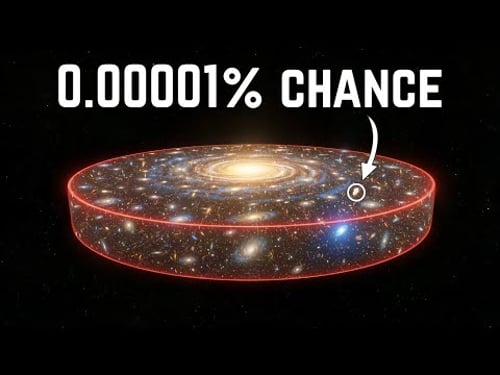
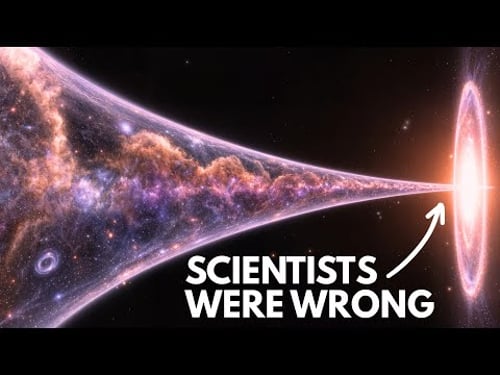
Right now, you are sitting on a rock hurtling through space at six hundred seventy thousand miles per hour. That rock orbits a nuclear furnace one million times its size. That furnace is one of four hundred billion stars spinning through a galaxy so vast that light itself needs one hundred thousand years to cross it. But here is what will shatter your mind. Our entire galaxy, with all its billions of worlds and countless civilizations that might exist, is nothing more than a single grain of sand in an ocean containing two trillion other grains. Our galaxy spans one hundred thousand light-years but feels infinite to us Light traveling at cosmic speed limit takes one hundred thousand years to cross our galaxy The nearest star outside our solar system reveals the true emptiness between stars Our galaxy contains four hundred billion stars yet represents a tiny fraction of existence The Andromeda galaxy dwarfs our Milky Way and approaches us at incredible speed Our local group contains over fifty galaxies in gravitational dance Galaxy clusters hold thousands of galaxies bound by invisible dark matter Superclusters stretch across five hundred million light-years of space The cosmic web reveals a universe structured like foam bubbles Cosmic voids contain almost nothing across three hundred million light-years The largest cosmic walls span distances that defy human comprehension Two trillion galaxies populate the observable universe alone Every direction we look contains more galaxies than grains of sand on Earth The observable universe measures ninety-three billion light-years across Space itself expands faster than light can travel through it The cosmic microwave background shows us the edge of visible existence Beyond our observation lies a universe potentially infinite in scope The universe may be two hundred fifty times larger than what we can see Dark energy accelerates the expansion separating distant galaxies forever Most galaxies will disappear from view as space stretches between us Our position in the universe determines what we can possibly observe The Hubble volume represents the maximum sphere we could ever influence Parallel universes may exist beyond our cosmic horizon The multiverse theory suggests infinite universes within infinite space Our entire observable universe could be smaller than an atom in a larger cosmos Humanity occupies one planet around one star in one galaxy among trillions









Universe Explorer's Kit
AI-recommended products based on this video

Xbox Core Wireless Gaming Controller – Pulse Red for Series X|S, One, Windows PC, Android, and iOS

Roycederm Redness Calming Cream for Rosacea-Prone Skin and Face – Soothing Moisturizer for Sensitive, Red or Irritated Skin – Hydrating Care with Azelaic Acid, Niacinamide, Sulphur & Centella

Cosplay Wig, Long Rose Red Wig for Women Girls, Hot Pink Straight Cosplay Wig with Ponytails for Halloween Anime Costume Party
