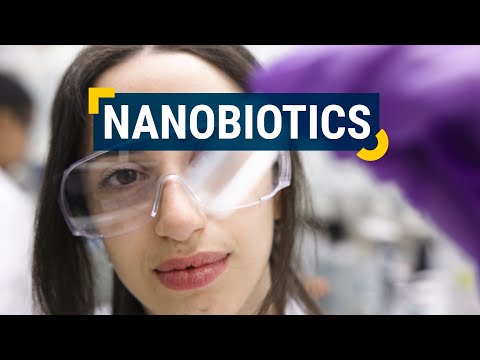
Using Nanoparticles to Combat Antibiotic Resistance Bacteria

Michigan Engineering
@michiganengineeringAbout
At Michigan Engineering, we develop the talent and technologies that move society forward. Watch immersive student experiences, industry-driving innovations and inspiring stories of leadership in action. See breakthrough discoveries in our labs translate into new tech, startups and jobs, and better outcomes for society. Explore the work, people and passions behind one of the world’s top engineering institutions. This is how Michigan Engineering is shaping the future—together. Our community of students, faculty, alumni and partners don’t just teach and learn what’s known today—we create new knowledge and push the boundaries of what’s possible. Our impact extends beyond campus, where we strengthen communities, power economies and improve lives around the world. Join the conversation by sharing your thoughts, questions and ideas in the comments. Please review our community guidelines here: https://www.youtube.com/post/Ugy5pIGpShTHpugiVaV4AaABCQ . Thanks for watching!
Latest Posts
No results found. Try different keywords.
Video Description
Currently, 5 million people die each year to antibiotic resistance bacteria and the number is rising. To treat infections, health professionals continually modified current antibiotics instead of synthesizing new ones, leaving us defenseless against bacteria that evolve to resist these antibiotics. Fully engineered nanoparticles are a promising alternative due to bacterias inability to form resistance, but it has not been known how to use them in real world applications. To address this, University of Michigan researchers across multiple disciplines - mechanical engineering, chemical engineering and Emergency medicine - formed together in 2018 to develop a unique approach, develop nanoparticles that can be synthesized to combat infections. They are using machine learning and AI to predict how a specific nanoparticle can interact with certain bacteria, helping to pave the way to create on demand antibiotics. This research is conducted by: Angela Violi, Arthur F Thurnau Professor Professor of Mechanical Engineering, Chemical Engineering, Biomedical Engineering, Macromolecular Science and Engineering, Applied Physics, and Biophysics https://sites.google.com/umich.edu/violilab/ J. Scott VanEpps Assistant Professor of Emergency Medicine, Biomedical Engineering, and Macromolecular Sciences and Engineering https://www.vanepps-lab-um.com/ Nicholas A. Kotov Irving Langmuir Distinguished University Professor of Chemical Sciences and Engineering Joseph B and Florence V Cejka Professor of Engineering Professor of Chemical Engineering, Biomedical Engineering, Materials Science and Engineering, and Macromolecular Science and Engineering https://kotov.engin.umich.edu/ ------ Watch more videos from University of Michigan Engineering and subscribe: @MichiganEngineering The University of Michigan College of Engineering is one of the world’s top engineering schools. Michigan Engineering is home to 12 highly-ranked departments, and its research budget is among the largest of any public university. http://engin.umich.edu Follow University of Michigan Engineering: Twitter: https://twitter.com/umengineering Facebook: https://facebook.com/michigan.engineering Instagram: https://instagram.com/michiganengineering
No Recommendations Found
No products were found for the selected channel.