Does the Universe Have a Maximum Temperature? The Planck Temperature Explained


Physics Explained
@physicsexplainedvideosAbout
Physics Explained is a channel that explores advanced topics in physics without skimping on the mathematical detail. There is a growing community of independent learners who are keen to explore modern ideas in physics with the aid of mathematical reasoning. This channel aims to tackle advanced topics head on whilst at the same time providing a historical narrative to help provide context to the ideas. A bit about my educational background: I have a PhD in theoretical physics, specialising in string theory. I now dedicate most of my my time to physics education. You can help support this channel via the Physics Explained Patreon account: https://www.patreon.com/physicsexplained
Latest Posts


Video Description
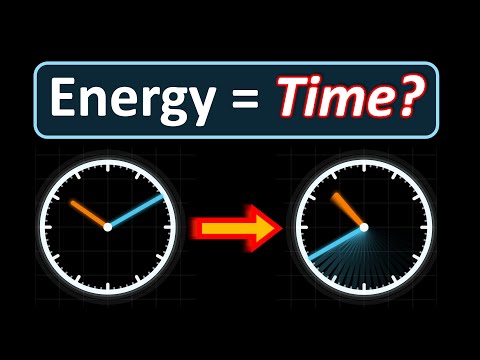
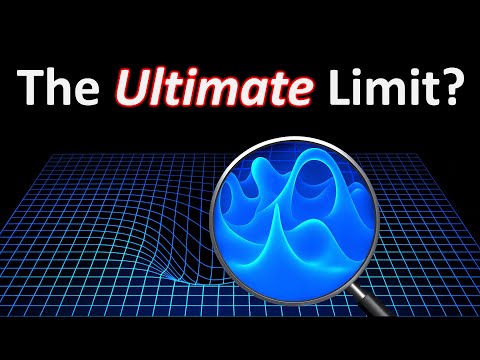
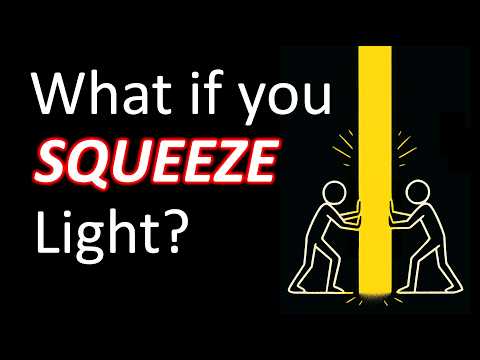
Thanks to Brilliant for sponsoring this video! Try Brilliant free for 30 days and get 20% off an annual premium subscription by following the link 👉 https://brilliant.org/PhysicsExplained/ You can help support this channel via the Physics Explained Patreon account: https://www.patreon.com/physicsexplained Does the Universe Have a Maximum Temperature? What determines the highest possible energy a particle can have? And why does temperature, of all things, take us to the very edge of physics? In this video, we explore the deep connection between confinement, energy, gravity, and the Planck temperature — the theoretical upper limit of temperature in our universe. In the first part of the video, we investigate how squeezing a particle into smaller and smaller spaces causes its energy to rise — first through quantum mechanics, then relativity. We show how the minimum energy scales as ℏc/L and how this links directly to temperature via Boltzmann’s constant. In the second part, we introduce gravity and show that extreme confinement leads to gravitational collapse, defining a minimum meaningful length: the Planck length. From this, we derive the Planck temperature and explore its meaning as a fundamental boundary beyond which our current theories break down. Finally, we link this result to black hole thermodynamics and Hawking radiation, showing that a black hole with Planck-scale mass and size radiates at the Planck temperature — a beautiful unification of quantum mechanics, relativity, and thermodynamics. You can follow me on instagram: https://www.instagram.com/physics_explained_ig You can follow me on X: https://twitter.com/PhysicsExplain1





Unlock Cosmic Understanding
AI-recommended products based on this video

The Ultimate Book of Random Fun Facts: Over 1000 Interesting Facts And Trivia Quizzes About History, Science, Sports, Animals, Space and Anything In Between!

The Big Book of Silly Jokes for Kids

Book of Lives: A Memoir of Sorts

The Book of Sheen: A Memoir

Monopa Boys Leather Reversible Belt - Brown and Black Belt for Kids Youth No Hole Uniform Casual Dress Belt
