“The House Is Black”: A Model Life Narrative by Forugh Farrokhzad, LMEI, SOAS University of London


SOAS University of London
@soasuniAbout
SOAS, the world's university. At SOAS, we use our expertise in Africa, Asia and the Middle East as a lens through which to interrogate the planetary questions of our time. Find out more at https://www.soas.ac.uk SOAS is home to the leading research and expertise on the global issues of today. Our students engage with our academics on these issues throughout their study. We are uniquely placed to inform and shape current thinking about the economic, political, cultural, security and religious challenges of our world. Our decolonial outlook on education allows us to strive for a more equal and just world through our teaching and research. We are committed to building bridges within the global communities and forging equitable global partnerships.


Video Description
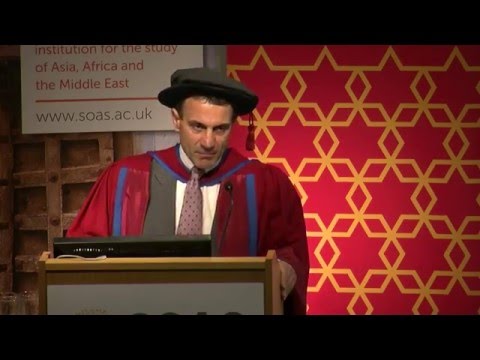
This lecture titled '“The House Is Black”: A Model Life Narrative by Forugh Farrokhzad' was the third of four lectures on Forugh Farrokhzad by Farzaneh Milani. Part of the Yarshater Lecture Series in Persian Literature. You can find out more about this event at https://goo.gl/FRoQGs You can find out more about this event series at https://goo.gl/SdEFiq I vividly recall the first time I watched the short documentary, The House Is Black. It was one hot summer evening, the smell of dust and jasmine everywhere, and suddenly the indelible images of children, women, and men disfigured by leprosy appeared on the television screen. Watching the film through teary eyes, I was jolted by its magnetism, its humanity and visual poetry. Like an alchemist, the young director had managed to transform a slice of life into a profile in courage. Refusing to map the world based on binary opposites – normality or abnormality, health or ailment, purity or impurity, beauty or ugliness, captivity or freedom – Farrokhzad articulated various conflicting stories that unfold seamlessly into one another. She employs distinct narrative voices. She offers detailed information, without invading privacy, without prying, without sensationalizing and moralizing. Like Picasso, who could paint a portrait with just a few lines, she zooms her camera on the essentials, and captures the soul of her subjects. She cuts through walls and veils and masks. She crosses layers of prejudice, fear, and misinformation. She presents a range of angles, multiple levels of meanings, alternative perspectives. She welcomes paradoxes, ambiguities, even contradictory voices and truths. With great respect for human pride and dignity, she avoids turning lives into metaphors, manipulating them, essentializing them, or immobilizing them in a single frame or a single story. Farzaneh Milani is Raymond J. Nelson Professor and Chair of the Department of Middle Eastern and South Asian Languages and Cultures and former Director of Studies in Women and Gender at the University of Virginia. She has published several books, most recently Words, not Swords: Iranian Women Writers and the Freedom of Movement (Syracuse University Press, 2011; co-winner of Latifeh Yarshater Award), and over one hundred articles, epilogues, forewords, and afterwords in both Persian and English. She has served as the guest editor for special issues of Nimeye-Digar, Persian Language Feminist Journal, IranNameh and Iranian Studies: Journal of the International Society for Iranian Studies. She has written for the New York Times, the Washington Post, Christian Science Monitor, Ms. Magazine, Reader's Digest, USA Today, and contributed to National Public Radio's All Things Considered. She has presented 240 lectures nationally and internationally. A past president of the Association of Middle Eastern Women's Studies in America and a Carnegie Fellow, Milani was the recipient of the All University Teaching Award as well as Zintl Leadership Award (2015). Chair: Nima Mina, SOAS



Literary Masterpiece Essentials
AI-recommended products based on this video
