A Plane Without Wings: The Coléoptère

Mustard
@mustardchannelAbout
Mustard explores curious and often little known topics and strives to make them entertaining by focusing on beautiful presentations, engaging narratives...and maybe a little humor too. We produce new videos regularly so please subscribe! https://mustardchannel.com
Latest Posts




Video Description
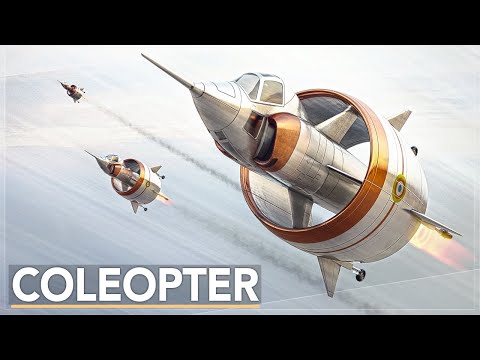
Watch the ‘The Origins of Stealth: The F-117 Nighthawk’ here: https://nebula.tv/videos/mustard-the-origins-of-stealth Watch More Mustard Videos & Support The Channel: https://nebula.tv/mustard Patreon: https://www.patreon.com/MustardChannel Mustard Store: https://mustardchannel.com/ Instagram: https://www.instagram.com/mustard_channel Twitter: https://twitter.com/MustardVideos Facebook: https://www.facebook.com/Mustard-109952378202335 Throughout the 1950s, aircraft designers around the world began developing a unique aircraft configuration, called a tail-sitter. Unlike conventional airplanes, tail sitting planes rested on their tails and used engine power alone to lift off the ground before transitioning to vertical flight, and returning to land vertically once again on their tail. The configuration, although technically challenging to develop, would allow aircraft to operate without runways, fundamentally changing how and where air forces could use their aircraft. In the early 1950s French aerospace firm SNECMA (Société nationale d'études et de construction de moteurs d'aviation) began developing wingless test rigs to prove the viability of the tail sitting concept. At the time, American firms were also developing tail sitting prototypes of their own, But SNECMA would take it a step further by developing a tail sitting aircraft with a highly unconventional annular (cylindrical) wing. The cylindrical wing promised greater efficiency over a conventional wing by eliminating wing-tip vortices. It would also be more compact, further reducing the space needed for vertical take-off and landings. French designers also theorised that a cylindrical wing could eventually be engineered to function as a ramjet engine, propelling the aircraft to supersonic speeds. The C.450 Coleoptere was constructed in 1958, with tethered flight testing beginning in early 1959. By May, the unconventional plane had achieved its first successful unassisted hover, even reaching altitudes of 800 meters. Despite early successes during flight tests, flaws soon emerged in the aircraft’s design. The Coleoptere proved extremely difficult to pilot. An innovative pilot seat could swivel 90 degrees, but pilots still struggled to judge the aircraft’s distance from the ground while landing. Without a conventional wing to provide resistance, the Coleoptere also had a tendency to slowly spin on its axis. On July 25, 1959, the Coleoptere performed it’s 9th test flight. This time, the pilot was to transition the aircraft from vertical to horizontal flight, a challenging procedure that would mark a huge milestone for the program. The Coleoptere lifted off successfully, but during its transition, it suddenly became too inclined and slow-moving to maintain altitude. The aircraft started tumbling back to earth as the pilot struggled to regain control, barely managing to eject at the very last minute. The Coleoptere was destroyed. A second prototype of the Coleoptere would never be built. By the 1960’s it was clear that the tail sitting configuration was a dead-end. It was simply too much of a compromise when it came to payload and range, and far too difficult to pilot. It was clear that vectoring thrust, allowing the aircraft to remain horizontal, was a more practical and safer solution. Video and imagery supplied by Getty Images: https://www.gettyimages.ca/photos/video Thanks for watching!
You May Also Like










Essential Airplane Modeling Kits
AI-recommended products based on this video

LEGO Technic Kawasaki Ninja H2R Motorcycle Toy - Building Toys for Kids, Boys & Girls, Ages 10+ - Kickstand for Display - Model Kit Birthday Gift - 42170

LEGO Icons Williams Racing FW14B & Nigel Mansell F1 Model Car Kit - Building Set for Adults, Ages 18+ - F1 DIY Craft for Display - Gift Idea for Fans of F1-10353

LEGO Star Wars TIE Bomber Model Building Kit, Star Wars Toy Starfighter with Gonk Droid Figure, Darth Vader Minifigure and Lightsaber, Collectible Star Wars Gift for 9 Year Olds, 75347

LEGO City F1 Driver with McLaren Race Car Toy - Model Car Building Toy Kit for Kids, Boys and Girls, Ages 6+ - F1 Collectible for Fans - with a Driver Minifigure - Gift Idea for Birthdays - 60442

LEGO Technic Bush Plane Toy - Buildable Airplane Toy for Kids, Boys and Girls, Ages 8+ - Model Airplane Gift with Spinning Propeller, 4-Cylinder Piston Engine, and More - 42198