Could This Change Air Travel Forever?

Mustard
@mustardchannelAbout
Mustard explores curious and often little known topics and strives to make them entertaining by focusing on beautiful presentations, engaging narratives...and maybe a little humor too. We produce new videos regularly so please subscribe! https://mustardchannel.com
Latest Posts




Video Description
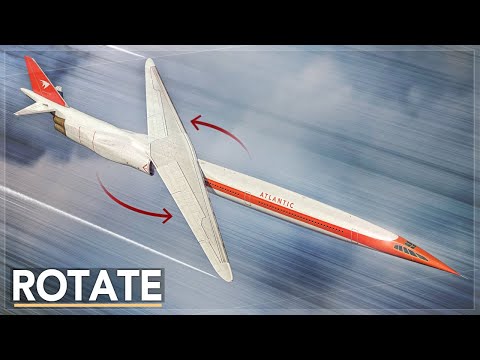
Get Nebula for just $2.50 a month here: https://go.nebula.tv/mustard Watch 'The Largest Aircraft Never Built - The Lockheed CL-1201' here: https://nebula.tv/videos/mustard-the-largest-aircraft-never-built-the-lockheed-cl1201 Patreon: https://www.patreon.com/MustardChannel Mustard Store: https://mustardchannel.com/ Instagram: https://www.instagram.com/mustard_channel Twitter: https://twitter.com/MustardVideos Facebook: https://www.facebook.com/Mustard-109952378202335 Bilateral symmetry is an unspoken assumption in aircraft design. Anything in nature that flies, from the smallest insect to the largest bird, possesses symmetry. But birds don't fly supersonic. In the 1950’s Robert Thomas Jones, a brilliant NASA engineer, began developing a radical new wing arrangement called an oblique wing (also referred to as a skewed wing). The wing design was characterized by a wing that could pivot into a unique angled configuration in relation to the aircraft’s fuselage. The design offered several advantages over more conventional swept wings. An oblique wing’s ability to pivot into a straight wing made it ideal for low speed flight (improving efficiency and take-off/landing performance), but at transonic and supersonic speeds, the angled orientation minimized both wave and induced drag, leading to improved overall aerodynamic efficiency. With lower drag at higher speeds, oblique wing aircraft would require less thrust to maintain a given speed, resulting in reduced fuel consumption and operating costs. Compared to other variable geometry wings, oblique wings would also be lighter, less complex and have fewer drawbacks like a shifting center of lift. Jones proved his theories through wind tunnel tests and with small scale remote control models. Promising results prompted NASA to undertake more intensive research during the 1970s. The first major step was the propeller-driven Oblique Wing Remotely Piloted Research Aircraft (OWRPRA) which first took flight in 1976. At the same time, aviation leaders Boeing and Lockheed were invited to study oblique wings to assess their benefits to commercial air travel. In 1979 the NASA Ames-Dryden-1 (AD-1), a subsonic, human piloted oblique wing aircraft began rigorous flight testing. NASA’s research efforts validated many of Jones’s theories, and the oblique wing demonstrated promise in real world flight. There were plans to follow the subsonic AD-1 program with a supersonic testing program using a modified U.S Navy F-8 fighter, but the program was cancelled early on in development. Budget constraints and shifting priorities have largely stalled intensive oblique wing research programs since the early 1990s. There are still widespread reservations about the flying qualities of highly asymmetrical aircraft. Flight control at extreme wing pivots is unfavorable and requires automated systems to augment flight control. Using modern flight control technologies and advanced materials, many of these drawbacks could be overcome. Oblique wings are still considered a viable concept for large transports and many are convinced that they will eventually be adopted. The advantages are simply too great to ignore. Key Research: “Thinking Obliquely: Robert T. Jones, the Oblique Wing, NASA’s AD-1 Demonstrator” by Bruce I. Larrimer (2019): https://www.nasa.gov/wp-content/uploads/2015/04/ThinkingObliquely-ebook.pdf
You May Also Like












Air Travel Upgrade Must-Haves
AI-recommended products based on this video

Bose QuietComfort Wireless Noise Cancelling Headphones, Bluetooth Over Ear Headphones with Up to 24 Hours of Battery Life, Moonlight Grey - Limited Edition

Anker USB C Charger Cable (6ft 100W, 2Pack), USB 2.0 Type C Fast Charging Cable for iPhone 15 / 15Pro / 15Plus / 15ProMax MacBook Pro 2020, iPad Pro 2020, iPad Air 4, Samsung Galaxy S23+/S23 Ultra ClimatePartner certified
![Anker USB C Cable, [2-Pack, 6 ft] Type C Charger Premium Nylon USB Cable, USB A to Type C Charging Cable Fast Charge for Samsung Galaxy S10 S10+ / Note 8, LG V20 and Other USB C Charger (Black)](https://m.media-amazon.com/images/I/71N7xhCJnoL._AC_UL960_FMwebp_QL65_.jpg)
Anker USB C Cable, [2-Pack, 6 ft] Type C Charger Premium Nylon USB Cable, USB A to Type C Charging Cable Fast Charge for Samsung Galaxy S10 S10+ / Note 8, LG V20 and Other USB C Charger (Black)
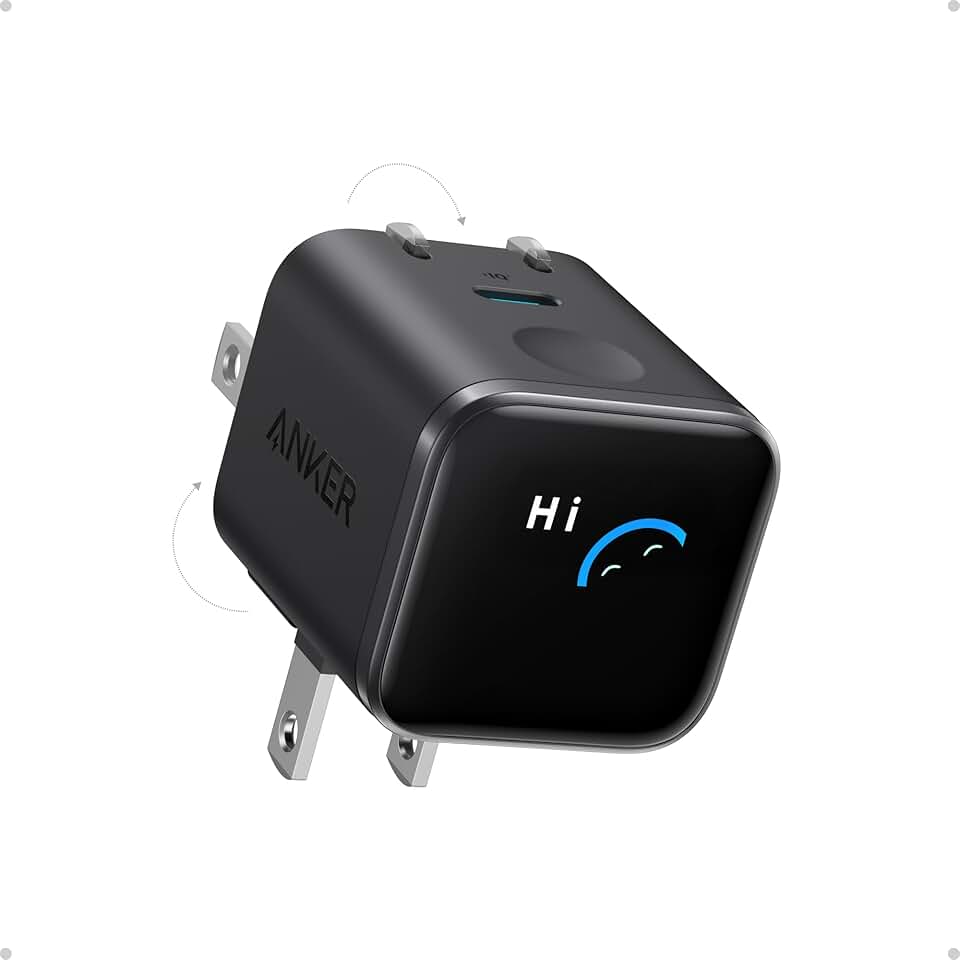
Anker Nano USB C Wall Charger,45W Fast Charging Smart Display Charger,with 180°Foldable Plug,Smart Recognition,Built-in Care Mode,for iPhone17/16/15 (Non-Battery,One USB-C Port,No Cable Included) ClimatePartner certified

OSOCE RFID Mens Sling Bag, Anti-theft Crossbody Shoulder Bag Travel Cycling Sport Hiking Bags for Men Women Casual Daypack(2.0Black-S)

2Pcs Sling Bag for Men Women,Waterproof Crossbody Bag Anti-theft Hiking Backpack Nylon Cross Body Chest Bag for Travel Workout

Tzowla Tzowla Travel Laptop Backpack Water Resistant Anti-Theft Bag with USB Charging Port and Lock 15.6 Inch Computer Business Backpacks for Women Men College School Student Gift,Bookbag Casual Daypack
![HDMI Switch 4K 60Hz, WARRKY HDMI Switcher 2 in 1 Out [Aluminum Case, Fixed Braided Cable] Bidirectional HDMI Splitter 2x1 Support HDR, 3D, 4K, 1080P Compatible for PS5/4, Xbox, Roku, Fire Stick](https://m.media-amazon.com/images/I/81PjYhaIDCL._AC_UL960_QL65_.jpg)
HDMI Switch 4K 60Hz, WARRKY HDMI Switcher 2 in 1 Out [Aluminum Case, Fixed Braided Cable] Bidirectional HDMI Splitter 2x1 Support HDR, 3D, 4K, 1080P Compatible for PS5/4, Xbox, Roku, Fire Stick

Amazon Fire TV Stick 4K (newest model), streaming device, more than 700,000 movies and TV episodes, supports Wi-Fi 6, watch free & live TV Reducing CO2

Amazon Fire TV Stick 4K Max (newest model), streaming device, supports Wi-Fi 6E, free & live TV without cable or satellite

soundcore by Anker Q20i Hybrid Active Noise Cancelling Headphones, Wireless Over-Ear Bluetooth, 40H Long ANC Playtime, Hi-Res Audio, Big Bass, Customize via an App, Transparency Mode, Ideal for Travel

soundcore by Anker P20i True Wireless Earbuds, 10mm Drivers with Big Bass, Bluetooth 5.3, 30H Long Playtime, IPX5 Water-Resistant, 2 Mics for AI Clear Calls, 22 Preset EQs, Customization via App

soundcore by Anker Q20i Hybrid Active Noise Cancelling Headphones, Wireless Over-Ear Bluetooth, 40H Long ANC Playtime, Hi-Res Audio, Big Bass, Customize via an App, Transparency Mode, Ideal for Travel
