What No One’s Saying About Trump and India’s Trade War


Pyotr Kurzin | Geopolitics
@pkurzinAbout
I’m Pyotr Kurzin, host of The Global Gambit. I’ve spent years working across Africa and Eastern Europe with the World Bank and the International Crisis Group, and trained in strategic studies and economic statecraft at Johns Hopkins SAIS. This isn’t second-hand commentary — it’s first-hand field and policy experience brought straight to you. Everyone has biases — but the only way to really grow is to test them, step out of our comfort zones, and avoid echo chambers. That’s exactly what this channel is for. Pyotr prides himself in engaging all sides. SUPPORT THE SHOW ○ Patreon: https://www.patreon.com/theglobalgambit ○ Buy Me a Coffee: https://www.buymeacoffee.com/theglobalgambit FOLLOW FOR MORE ○ X/Twitter: https://twitter.com/PKurzin ○ Substack: https://pyotrskurzin.substack.com/ For media or partnership enquiries email: [email protected]
Video Description
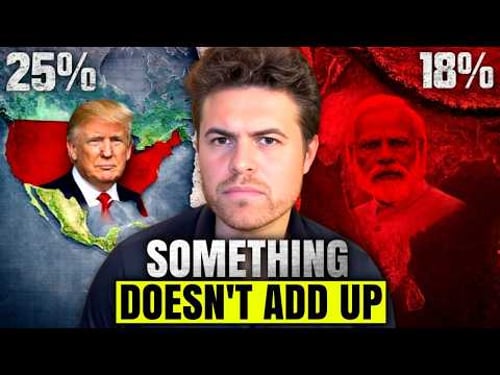
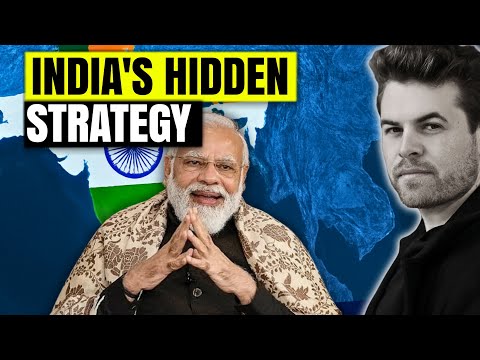
America’s courtship with India was meant to reshape Asia. But what began as a strategic partnership is quietly becoming a test of trust — strained by tariffs, shifting alliances, and Washington’s renewed interest in Pakistan. Behind the public warmth, both sides are hedging. India wants U.S. technology but not dependency. Washington wants India’s support against China — but won’t abandon Islamabad entirely. Every new policy, every tariff, every defence deal is a reminder that this relationship is built as much on caution as on cooperation. At the same time, India’s historical ties with Russia remain intact, while its economic future is pulled toward China’s orbit. The result is a delicate balancing act — one that could determine South Asia’s role in the next world order. So in this part 1 of 2, I speak with tech and geopolitical analyst, Abishur Prakash about how Trump’s tariffs are reshaping India’s strategy, why Pakistan is quietly making a comeback in Washington’s playbook, and whether India can truly stay “strategically autonomous” in a world defined by unpredictable power shifts. Abishur Prakash—known worldwide as “Mr. Geopolitics”— is a geopolitical strategist and founder of The Geopolitical Business, Inc, an advisory firm in Toronto. He is the author of five books, including his latest, “The World Is Vertical.” Prakash also produces the Mr. Geopolitics daily insight, read by global leaders. 👉 Let me do the overthinking for you. Support me on Patreon: https://www.patreon.com/theglobalgambit ✍️ Get my newsletter: https://pyotrskurzin.substack.com/. Because the world’s a mess, and someone needs to mock it intelligently. ☕ KEEP ME CAFFINATED ☕ https://www.buymeacoffee.com/theglobalgambit ✨ LETS CONNECT ✨ https://twitter.com/PKurzin https://www.instagram.com/pyotrsfootprints/ https://podcasts.apple.com/us/podcast... https://bsky.app/profile/pyotrkurzin.bsky.social 🚨 YOUTUBE MEMBERSHIP 🚨 https://www.youtube.com/@theglobalgambit/membership Chapters 00:00 Introduction 01:34 The Evolving US-India Relationship 04:14 India's Strategic Autonomy and Economic Interests 08:00 India's Position in Global Trade 10:40 US-Pakistan Relations and Its Impact on India 13:08 Trump's Influence on Geopolitical Strategies 15:48 The Current State of US-India Relations 18:15 India's Role in BRICS and Global South #india #usa #pakistan #geopolitics #internationalrelations #economy







Stay Informed with These Top Books
AI-recommended products based on this video

The Body Keeps the Score: Brain, Mind, and Body in the Healing of Trauma
